
A Complete Guide for Businesses and Startups (2026)
Investing in professional Mobile App Development Uganda services has shifted from a peripheral experiment to an absolute growth priority for forward-thinking enterprises across East Africa. Over the past decade, Uganda has undergone a massive digital transformation. Smartphone adoption has surged across Kampala, Entebbe, Jinja, Mbarara, and upcountry urban hubs, making mobile devices the primary entry point for communication, digital commerce, SACCO management, healthcare bookings, and financial services. Relying solely on physical storefronts or crowded social media feeds leaves local businesses vulnerable to administrative bottlenecks, lost orders, and aggressive competition from digitally native platforms.
Operating a business exclusively through manual social media inquiries or static web pages introduces operational friction. Incoming messages get buried under hundreds of daily chats, order details are logged on fragmented spreadsheets, and payment validation requires staff to manually cross-check Mobile Money SMS alerts before dispatching goods. A custom-engineered mobile application removes these bottlenecks entirely. It provides your customers with an instant, self-service platform to browse inventory, book consultations, or transfer funds using MTN Mobile Money and Airtel Money, triggering automated order confirmations, real-time push notifications, and seamless database synchronization.
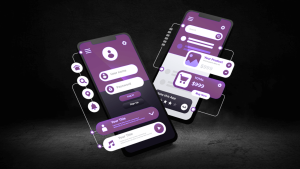
Mobile-first UI/UX architecture designed specifically for high conversion rates on Ugandan cellular networks.
Why Mobile App Development Uganda Is Becoming Essential for Local Enterprises
As smartphone penetration deepens across East Africa, consumer purchasing behavior heavily favors touch-optimized, on-demand digital interactions. Modern Ugandan buyers expect fast loading speeds, localized payment options, and instant updates directly on their mobile screens.
Solving the Bottlenecks of Manual Channels
While social media and messaging channels work well for early-stage customer discovery, using them as your sole operational pipeline introduces major vulnerabilities:
- Untracked Sales Leads: Managing high transaction volumes through personal chat apps leads to dropped orders and delayed customer support responses.
- Payment Verification Fraud: Manual SMS checks expose your accounting team to forged Mobile Money screenshots and fraudulent reversal schemes.
- Zero Offline Functionality: Standard mobile web pages require continuous internet connectivity, failing users who experience network drops or intermittent data coverage.
- Fragmented Customer Data: Messaging apps fail to centralize user purchasing histories, preventing automated remarketing campaigns and loyalty rewards.
Driving Conversions via Native Device Features
Unlike basic websites, mobile applications interface directly with native smartphone hardware and operating systems. Custom mobile apps leverage direct device integrations to deliver higher engagement and retention:Push Notifications
Direct background alerts sent to a user’s lock screen, boasting open rates up to four times higher than conventional email marketing campaigns.Biometric Authentication
Fingerprint scanning and facial recognition protocols (Face ID) that secure sensitive financial apps and speed up user logins.GPS & Geofencing
Real-time spatial mapping that enables live driver tracking for ride-hailing platforms, delivery routing, and location-based promotions.Offline-First Data Storage
Local SQLite/Realm database caching that allows field staff, SACCO officers, or logistics drivers to work smoothly without an active cellular connection.
Core Technical Framework of Modern Business Mobile Applications
Building a commercial-grade mobile app requires aligning client-side user interfaces, backend API layers, and third-party payment infrastructure into a single, cohesive architecture.

Types of Mobile Applications Built for the Ugandan Market
Depending on operational needs, Ugandan companies generally develop five distinct app categories:
| Category | Core Capabilities | Target Industries | Essential Integrations |
| Fintech & SACCO Apps | Savings tracking, micro-loans, wallet top-ups, transaction histories | SACCOs, Microfinance, Investment Clubs, Banks | MTN MoMo, Airtel Money, Bank APIs, Biometrics |
| On-Demand Delivery & Transport | GPS driver tracking, fare calculation, real-time booking, route mapping | Courier Companies, Boda Aggregators, Ride-Hailing, Food Delivery | Google Maps API, Push Notifications, Payment Gateways |
| E-Commerce & Retail | Product catalogues, digital carts, instant checkout, order status tracking | Fashion Boutiques, Electronics Outlets, Supermarkets, Pharmacies | Inventory Databases, Mobile Money, Automated SMS Receipts |
| Healthcare & Telemedicine | Doctor appointment booking, digital prescriptions, lab report access, virtual consultations | Private Hospitals, Diagnostic Labs, Telemedicine Startups, Clinics | Secure Video Streaming, Patient Record Systems, HIPAA/Data Privacy Protocols |
| Service Booking & Portals | Appointment scheduling, staff allocation, service catalogues, digital receipts | Salons, Spas, Auto Garages, Schools, Consultancy Firms | Calendar APIs, Automated Reminders, Mobile Payment Gateways |
Choosing the Right Development Stack: Native vs. Cross-Platform
Selecting the technical architecture for your app determines your development timeline, initial setup budget, and long-term maintenance overhead.
1. Cross-Platform Frameworks (Flutter & React Native)
Modern cross-platform tools like Google’s Flutter and Meta’s React Native allow developers to build high-performance applications for both Android and iOS from a single, shared codebase.
- Pros: Cuts dual-platform development costs by 30%–40%, accelerates launch timelines, and guarantees feature parity across platforms.
- Cons: Requires specialized bridge modules for rare hardware integrations or ultra-heavy 3D graphics rendering.
- Recommendation: Highly recommended for 90% of Ugandan startups, SMEs, e-commerce stores, and booking platforms.
2. Native Development (Kotlin for Android / Swift for iOS)
Native software engineering involves writing separate, dedicated codebases using official platform languages.
- Pros: Delivers maximum raw processing performance, immediate support for new operating system features, and deep access to hardware sensors.
- Cons: Requires maintaining two independent engineering pipelines, effectively doubling development budgets and post-launch maintenance resources.
- Recommendation: Best reserved for enterprise-grade applications, high-frequency stock trading platforms, or intensive 3D mobile games.
Strategic Market Reality: Over 85% of mobile web and application traffic in Uganda originates from Android devices. If launching on a tight budget, prioritize an Android-first or Flutter cross-platform deployment before investing heavily in dedicated native iOS builds.
Backend database design, security hardening, and API middleware form the backbone of scalable mobile applications.
6-Stage Lifecycle for Engineering Successful Mobile Applications
Executing an enterprise mobile software build demands a structured roadmap to manage scope, eliminate security gaps, and launch successfully on app stores.
1.Discovery, Scope Definition & Technical Specifications:
Map out user personas, define minimum viable product (MVP) requirements, document backend database schemas, and establish key performance indicators (KPIs).
2.UI/UX Wireframing & Interactive Prototyping:
Construct user navigation flows, interactive Figma prototypes, brand-aligned visual systems, and touch-friendly button layouts tailored for one-handed mobile use.
3.Frontend Mobile Engineering & Backend API Build:
Write clean code using Flutter, React Native, or Kotlin. Build RESTful/GraphQL endpoints, implement secure JWT user login sessions, and configure database architecture.
4.Payment Gateway & Third-Party API Integration:
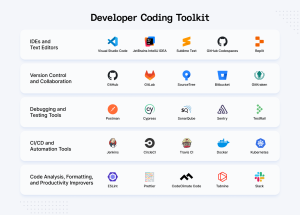
Connect secure API endpoints for MTN Mobile Money, Airtel Money, Pesapal, Flutterwave, Firebase Push Notifications, and Google Maps.
5.Quality Assurance, Security Penetration & Beta Testing:
Execute rigorous cross-device testing across low-end Android handsets, audit network behavior during data drops, and perform penetration testing to protect user privacy.
6.Play Store & App Store Deployment with Ongoing Maintenance:
Configure Google Play Console and Apple Developer accounts, optimize App Store listings (ASO), deploy live backend environments, and establish continuous maintenance protocols.
Comprehensive Cost Breakdown for Mobile App Development Uganda (UGX & USD)
Understanding realistic project costs prevents unexpected delays, mid-project scope changes, and budget overruns during software development.
| App Complexity Level | Target Functionality & Scope | Estimated Cost Range (UGX) | Typical Timeline |
| Basic Informational / Directory MVP | Static content views, contact forms, push alerts, simple search, simple database | UGX 3,500,000 – UGX 8,000,000 | 4 – 8 Weeks |
| Mid-Level Business / Booking App | User profiles, database management, appointment booking, search filters, Mobile Money integration | UGX 8,500,000 – UGX 25,000,000 | 8 – 14 Weeks |
| Full E-Commerce / Delivery Platform | Multi-vendor support, inventory management, dynamic delivery calculations, real-time GPS tracking, dual payment gateways | UGX 25,000,000 – UGX 55,000,000 | 12 – 20 Weeks |
| Enterprise Fintech / Custom Platform | Bank-grade security encryption, regulatory reporting, complex financial logic, custom APIs, micro-services backend | UGX 60,000,000 – UGX 150,000,000+ | 4 – 9 Months |
Additional Ongoing Maintenance & Infrastructure Expenses
In addition to upfront software development fees, budget for these necessary operational expenses:
- Google Play Developer Account: $25 USD one-time registration fee.
- Apple App Store Developer Program: $99 USD recurring annual subscription fee.
- Cloud Infrastructure Hosting (AWS / DigitalOcean): UGX 200,000 – UGX 2,500,000+ per month depending on database transactions and active users.
- SLA Maintenance & Technical Support: Typically 10%–15% of initial build cost annually for OS compatibility updates, bug fixes, and security patches.
Selecting the Ideal Mobile App Engineering Partner in Uganda
Choosing an experienced software firm ensures your app is well-architected, secure, and launched on time. Evaluate prospective software agencies against these critical criteria:
                  [ APP DEVELOPER SELECTION SCORECARD ]
+-----------------------------------------------------------------------+
|  1. Proven Mobile Money Integration Portfolio                         |
|     Verifiable experience deploying MTN MoMo & Airtel Money APIs    |
+-----------------------------------------------------------------------+
|  2. Full-Stack Web & Mobile Engineering Capacity                      |
|     Ability to build robust backends alongside responsive mobile UI  |
+-----------------------------------------------------------------------+
|  3. Offline-First Architectural Expertise                              |
|     Designing local database sync engines for flaky cellular networks   |
+-----------------------------------------------------------------------+
|  4. SLA Technical Support & Post-Launch Maintenance                   |
|     Guaranteed maintenance response times for security patches      |
+-----------------------------------------------------------------------+
Pro Tip: Always request direct links to published applications on the Google Play Store or Apple App Store. Test these apps on various smartphones to assess UI performance, page loading speed, and offline error handling before signing a software development contract.
Recommended Contextual Internal Links
Strengthen domain topical authority across key service siloes by embedding these internal recommendations:
- For cross-platform web and portal integrations, link to: Website Design Uganda
- For enterprise software development, link to: Website Design Company Uganda
- For web application CMS platforms, link to: WordPress Development Uganda
- For digital marketing and app indexing, link to: SEO Services Uganda
- For ongoing maintenance contracts, link to: Website Maintenance Uganda
- For high-speed server infrastructure, link to: Web Hosting Uganda
- For mobile app strategy consultations, link to: Mobile App Development Uganda
- For verified past client projects, link to: Portfolio and Contact Us
Authoritative External Links
Cross-reference technical standards and developer documentation using these industry resources:
- App Indexing Standards: Google Search Central
- Cross-Platform App Development Framework: Flutter Developer Portal
- Core App Performance Standards: Android App Quality Guidelines
- Mobile Security Protocols: OWASP Mobile Security Project